Waging War Against Air Pollution; China's Growing Resolve in Eliminating the Smog
Notorious for its thick blanket of smog, Beijing epitomises the struggle of China in balancing economic growth and environmental sustainability. Today we shall visit China's capital and delve into some of China's latest efforts in combating air pollution.
Beijing's recurrent smog episodes are largely attributed to coal-burning power stations that supply up to 25% of the city's total energy consumption, ever-growing vehicle population and heavy polluting industries from neighbouring regions such as Hebei with its steelmaking industrial activities. 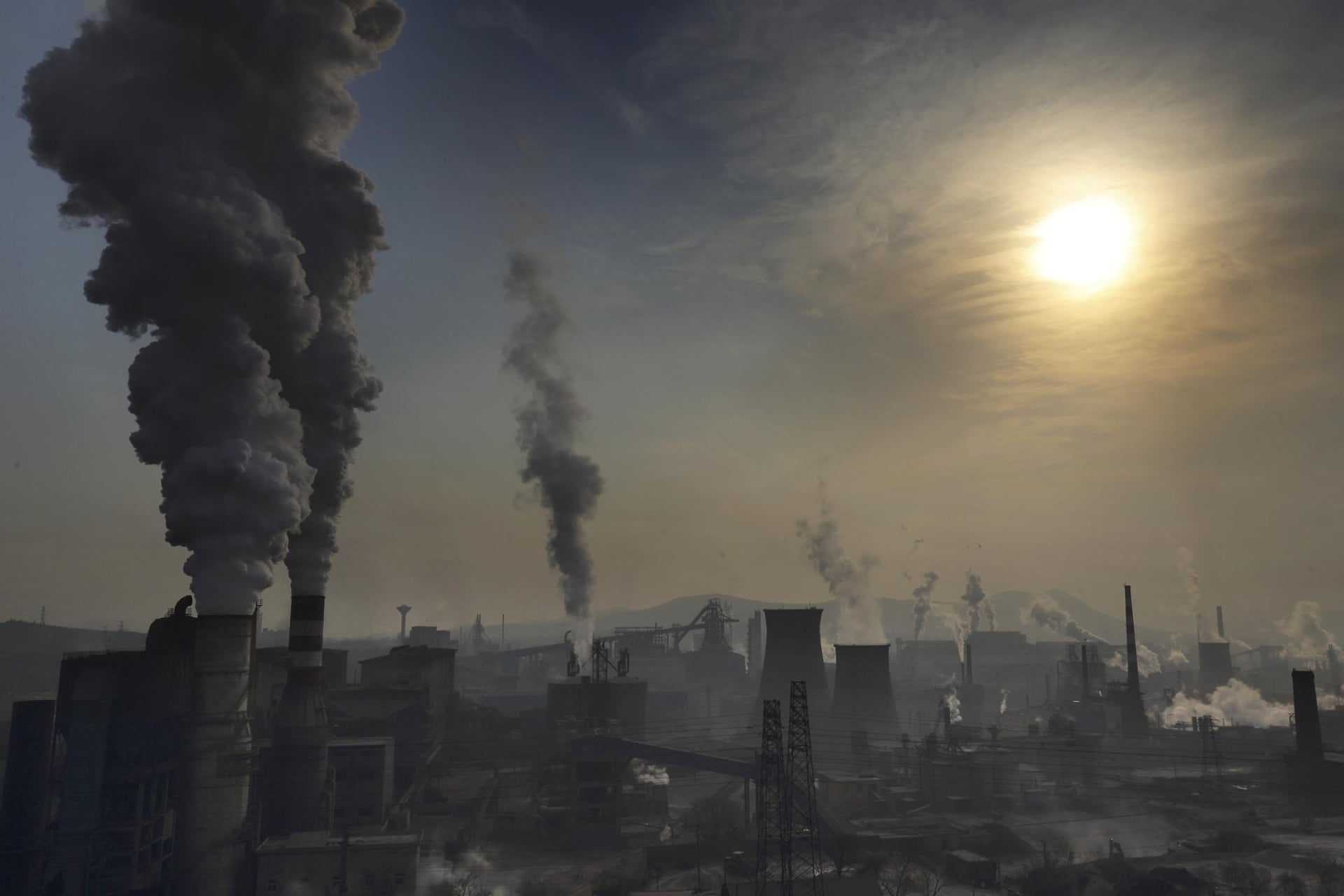 |
| Hebei's Steelmaking Industrial Activities Source: Eric Hilaire and Lu Guang/ Greenpeace |
For many years, the central government of China has been wielding a blunt sword against air pollution due to poor enforcement of the regulations by local governments. It has been widely regarded that there is a conflict of interest between the central government and its local governments in the resolve of eliminating air pollution. For instance, corruption is tainting the cause against air pollution as some local officials are reported to have close links with the owners of the polluting companies, while others continue to allow industries to pollute as the emission-violation fines represent a source of revenue for these local governments.
In light of this, the central government has introduced a set of incentives and stringent enforcements of the local governments in a bid to pressure them to step up their monitoring standards against the polluting industries and to adhere with air pollution regulations set by the central government. Meanwhile, efforts have also been taken to close down coal power stations in several districts in Beijing by 2020 with the longer term target to invest in more efficient power stations and transmission technology.
In addition, China has turned to technology via the use of aerial drones with thermal infrared cameras to help monitor industrial emission levels to deter industries from exceeding their emission limits. China's growing resolve against air pollution is slowly but surely making progress in achieving its aim to eliminate the smog in its major cities.
Stay tuned as I will discuss on how public pressure in China has been contributing to the fight against air pollution in my next blog post. Meanwhile please feel free to comment on my posts, drop any questions that you may have or even suggest a topic on air pollution that you would like me to post in the future. :)

Excellent, informative and interesting blog. China already has some of the toughest environmental legislation in the world. Perhaps you can comment on this - with regard to air pollution in particular - and speculate why implementation seems so problematic?
ReplyDeleteThanks for your comment :)! The environmental legislation set by the central government is indeed one of the toughest and most comprehensive in the world. However, the enforcement of the environmental regulations is managed by the local governments due to the decentralisation of the China government system. For example, pollution levies are regulated by the respective local governments.
ReplyDeleteThus, local governments are always accused of prioritising economic growth as they do not enforce stringent emission limits on the polluting companies for economic interests. Corruption within the local governments is also another reason behind the weak enforcement of the reguations.
In the past, only pressure was placed on the polluting companies while the local governments were not punished as severely for not adhering to the national emission standards.
However, there was a much applauded reform in the environmental legislation with the new environmental protection provisions (effective from Jan 2015) that will mete out punishment onto local governments that fail to enforce the national environmental regulations. In addition, local governments will be accessed on their ability to balance economic growth with environmental protection. It is also required of the local governments to disclose environmental information to the public. This is a brilliant move to utilise public pressure in ensuring the accountability of the local government to its people.